If you’ve been scheduled for a Doppler ultrasound, you might be wondering what to expect and how to prepare for the procedure. Rest assured, a Doppler ultrasound is a safe, painless, and non-invasive test that provides valuable insights into your vascular health. It helps doctors assess blood flow in your veins and arteries, ensuring any potential issues are detected early. Preparing for the scan properly can make the process smoother and ensure the results are as accurate as possible. Let’s dive into what a Doppler ultrasound is, why it’s essential, and how you can prepare for your appointment with confidence.
| Aspect | Key Information |
|---|---|
| What a Doppler Ultrasound Is | An ultrasound test that focuses on measuring blood flow through blood vessels using sound waves. |
| Main Diagnostic Purpose | Detects abnormal blood flow that may indicate clots, blockages, or vascular conditions. |
| Conditions It Can Detect | DVT, peripheral artery disease (PAD), carotid artery blockages, varicose veins, and aneurysms. |
| Why Preparation Matters | Proper preparation improves image clarity and the accuracy of blood flow assessment. |
| General Preparation Tips | Wear loose clothing, stay hydrated if required, fast for 6–8 hours for abdominal scans, and avoid smoking or caffeine. |
| Carotid Doppler Preparation | No fasting required; wear a shirt with a loose or open collar. |
| Abdominal Doppler Preparation | Fasting for 6–8 hours; avoid gassy foods and carbonated drinks. |
| Lower Limb Doppler Preparation | No special preparation is usually needed; wear shorts or loose trousers. |
| Pregnancy Doppler Preparation | Drinking water may be needed to ensure a full bladder for clearer imaging. |
| During the Scan | Gel is applied, a transducer is moved over the skin, and blood flow sounds may be heard. |
| Scan Duration | The scan usually takes about 30–60 minutes. |
| After the Scan | The gel is wiped off and normal activities can be resumed immediately. |
| When the Test Is Recommended | Swelling, leg pain during activity, numbness, cold or discolored limbs, bulging veins, dizziness, or stroke-like symptoms. |
| Preventive Value | Helps identify vascular problems early to prevent serious complications. |
What is a Doppler Ultrasound?
Unlike a traditional ultrasound that creates images of organs and tissues, a Doppler ultrasound focuses on blood flow. By using sound waves, it measures how blood moves through your vessels. The test can identify abnormalities in blood flow, which might indicate:
- Blood clots (Deep Vein Thrombosis or DVT)
- Narrowed or blocked arteries (Peripheral Artery Disease or PAD)
- Carotid artery blockages (a potential risk factor for strokes)
- Varicose veins and venous insufficiency
- Aneurysms or other vascular conditions
For many, it’s a key diagnostic tool that catches potentially serious conditions before they cause severe symptoms.

Why Preparation is Important
While the Doppler ultrasound procedure is straightforward, how you prepare can influence the clarity and accuracy of the results. For example, fasting or staying hydrated might be necessary depending on the area being scanned. Proper preparation ensures the technician can get a clear view of your blood vessels and assess your blood flow without interference.
General Tips to Prepare for Your Doppler Ultrasound
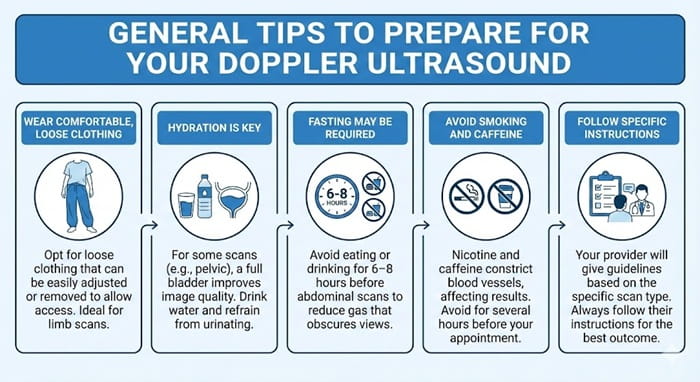
- Wear Comfortable, Loose Clothing
Opt for loose clothing that can be easily adjusted or removed to allow access to the area being scanned. For example, wearing shorts or loose trousers is ideal for a lower limb Doppler scan. - Hydration is Key
For some scans, like pelvic or abdominal Doppler ultrasounds, a full bladder can help improve image quality. You may be asked to drink water before your appointment and refrain from urinating until the test is complete. - Fasting May Be Required
If your scan involves the abdominal area, you might need to avoid eating or drinking for 6–8 hours before the test. This helps reduce gas in the intestines, which can obscure the view of blood vessels. - Avoid Smoking and Caffeine
Nicotine and caffeine can constrict blood vessels, potentially affecting the results. Avoid smoking or consuming caffeinated drinks for several hours before your appointment. - Follow Specific Instructions
Your healthcare provider or the imaging center will provide preparation guidelines based on the type of Doppler ultrasound you’re having. Always follow their instructions for the best outcome.
Specific Preparations Based on Scan Type
- Carotid Doppler Ultrasound (Neck):
No fasting is required. Wear a shirt with a loose or open collar to make the process easier. - Abdominal Doppler Ultrasound:
Fasting for 6–8 hours is typically required. Avoid gassy foods and carbonated beverages before the test. - Lower Limb Doppler Ultrasound:
No special preparation is usually needed. Wear shorts or loose trousers for convenience. - Pregnancy Doppler Ultrasound (Fetal):
You may need to drink water beforehand to ensure a full bladder for clearer imaging.
What Happens During the Appointment?
According to my.clevelandclinic.org:
A sonographer, a specialist in ultrasound imaging technology, performs this test. The test may take 30 to 60 minutes.
Depending on the reason for the test, you may lie on your back or side on an exam table, or you may sit up.
Knowing what to expect can ease any anxieties you might have:
- Check-In and Consultation
Upon arrival, you’ll be greeted by the technician, who will explain the procedure and answer any questions. They’ll also review any preparation guidelines with you. - The Procedure
- You’ll lie down on an examination table, and the technician will apply a warm gel to the area being scanned.
- A handheld device called a transducer will be moved over your skin. This device sends sound waves into your body and collects information about blood flow.
- You might hear whooshing or swishing sounds, which indicate blood moving through your vessels.
- Duration
The scan usually takes about 30–60 minutes, depending on the area being examined. - After the Scan
Once the scan is complete, you can wipe off the gel and go about your day as usual. There’s no downtime or recovery period required.
What Can Doppler Ultrasounds Detect?
Doppler ultrasounds are a powerful diagnostic tool that can detect and monitor a range of vascular conditions, including:
- Blood clots (DVT): Prevents serious complications like pulmonary embolism.
- Blocked arteries (PAD): Identifies reduced blood flow to limbs, which can cause pain or ulcers.
- Carotid artery blockages: Assesses stroke risk.
- Varicose veins: Guides treatment for venous insufficiency.
- Aneurysms: Monitors bulging blood vessels that may require intervention.
By identifying these issues early, Doppler ultrasounds play a crucial role in preventing more severe health problems.
When to Consider a Doppler Ultrasound
You might be a candidate for a Doppler ultrasound if you’re experiencing symptoms such as:
- Swelling in your legs or arms
- Pain or cramping in your legs during activity
- Unexplained numbness or tingling in your limbs
- Coldness or discoloration in your extremities
- A lump or bulging vein
- Dizziness or stroke-like symptoms (for carotid Doppler)
Additionally, if you have a history of cardiovascular disease, diabetes, or smoking, your doctor may recommend this test as a precautionary measure.

Take Control of Your Vascular Health
Doppler ultrasounds are a critical tool for diagnosing and managing vascular conditions. They’re quick, painless, and highly effective at identifying issues that might otherwise go unnoticed. Whether you’re monitoring an existing condition or seeking answers to unexplained symptoms, this scan can provide the clarity you need.
Don’t wait on your health—schedule your Doppler ultrasound today and take a proactive step toward better well-being.
Frequently Asked Questions
What is a Doppler ultrasound?
A Doppler ultrasound is a safe, painless, and non-invasive test that uses sound waves to measure how blood flows through your veins and arteries. It helps identify abnormalities such as blood clots, narrowed or blocked arteries, carotid artery blockages, varicose veins, and aneurysms.
How is a Doppler ultrasound different from a traditional ultrasound?
While a traditional ultrasound creates images of organs and tissues, a Doppler ultrasound focuses specifically on blood flow within your vessels.
Why is preparing for a Doppler ultrasound important?
Preparation can affect the clarity and accuracy of the results. Depending on the scan type, fasting or hydration may be necessary to ensure a clear view of your blood vessels.
What happens during a Doppler ultrasound appointment?
You will check in, speak with the technician, and lie on an examination table. Gel is applied to the area being scanned, and a transducer is moved over your skin to assess blood flow. You may hear whooshing sounds indicating blood movement. The scan typically lasts 30–60 minutes
Is there any recovery time after the scan?
No. After the scan, you can wipe off the gel and resume your normal activities immediately.
Which parts of the body can be examined with a Doppler ultrasound?
Depending on the symptoms, Doppler ultrasound can be used to examine the neck (carotid arteries), abdomen, legs, arms, or during pregnancy to assess blood flow.
Does the preparation differ based on the type of Doppler scan?
Yes. Preparation varies by scan type. For example, abdominal Doppler scans usually require fasting, while carotid and lower limb Doppler scans typically do not.
Why should smoking or caffeine be avoided before the test?
Smoking and caffeine can cause blood vessels to constrict, which may affect blood flow measurements and image accuracy.
What does it mean if sounds are heard during the scan?
The sounds heard during the scan represent blood moving through the vessels and help assess the speed and direction of blood flow.
Thank you for this article! I have a history of diabetes and occasional leg swelling, and I wasn’t sure if I should get a Doppler scan. Now I understand it’s painless, quick, and highly effective. How often should someone with risk factors repeat the test?
I wish I’d read something like this before my first Doppler scan 😅. I showed up after a coffee… didn’t realise caffeine affects the results!
Honestly, the article is helpful, but I feel like clinics should explain this stuff themselves instead of patients having to Google it the night before. I only found out about fasting because my scan got postponed last time.
I wish I had read something like this before my first Doppler ultrasound. I went in really nervous because I didn’t understand what “Doppler” actually meant, and no one explained it properly beforehand. This article breaks it down in a very calming way. Especially helpful was the part about hearing the whooshing sounds — that caught me off guard during my scan 😅
Thank you for this thorough guide! I’ve always been curious about Doppler ultrasounds, but I wasn’t sure what to expect. Your breakdown of preparation tips, procedure steps, and what it can detect makes it much less intimidating. It’s reassuring to know that such a non-invasive test can give important insights into vascular health.
Can a Doppler ultrasound detect minor blood flow issues that don’t cause symptoms yet?
The fasting part for abdominal Doppler is so important. My first scan had to be rescheduled because I ate breakfast 🤦♂️
I legitimately didn’t know about the no caffeine rule. I have my appointment at 9 am tomorrow and was planning to down a coffee beforehand. Glad I read this first
I didn’t realize that preparation could vary so much depending on the type of Doppler scan. The tip about avoiding caffeine and smoking before the test makes sense now—never knew that could affect the blood flow readings. Knowing what to expect during the scan, like the whooshing sounds, really eases my nerves.
for an abdominal Doppler ultrasound, if I accidentally eat something before fasting, will the scan still work, or will I need to reschedule? How strict is the fasting rule for accurate results?