Pelvic ultrasound, also known as a male ultrasound scan, is a non-invasive imaging technique used for various diagnostic purposes in men, including the evaluation of the prostate gland, bladder, seminal vesicles, and scrotal contents. It provides high-resolution, real-time images that help detect abnormalities such as prostate enlargement, bladder stones, cysts, or infections. Similar to a men’s general abdominal scan, pelvic ultrasound offers a safe and cost-effective way to assess pelvic organs, making it a valuable tool for diagnosing and managing urological conditions in men.
| Topic | Description |
|---|---|
| Definition of pelvic ultrasound in men | A non-invasive imaging technique used to evaluate the prostate gland, bladder, seminal vesicles, and scrotal contents, providing high-resolution, real-time images. |
| Prostate evaluation | Used to detect prostate abnormalities such as benign prostatic hyperplasia (BPH), prostatitis, or prostate cancer; also allows ultrasound-guided biopsies. |
| Bladder assessment | Provides detailed images of the bladder to assess bladder wall thickness, urinary volume, abnormalities such as stones or tumors, and residual urine after voiding. |
| Seminal vesicles examination | Visualizes seminal vesicles to identify abnormalities such as cysts, infections, or inflammation affecting their function. |
| Scrotal evaluation | Assesses testicles and epididymis to diagnose testicular torsion, epididymitis, hydrocele, varicocele, or testicular masses. |
| Non-invasive and safe | Does not involve ionizing radiation or contrast agents and is considered safe and well-tolerated. |
| Real-time imaging | Allows immediate visualization of pelvic structures and abnormalities for on-the-spot assessment and decision-making. |
| High resolution and detail | Provides detailed information about the size, shape, and texture of pelvic organs for accurate diagnosis. |
| Dynamic assessment | Enables visualization of changes during bladder filling and emptying or prostate movement to detect functional conditions. |
| Cost-effectiveness | More cost-effective compared to MRI or CT scans, making it an accessible diagnostic tool. |
Diagnostic Applications of Pelvic Ultrasound in Men
Pelvic ultrasound is employed for various diagnostic purposes in men, including:
Prostate Evaluation
Pelvic ultrasound is commonly used to assess the prostate gland. This type of scan—often referred to as a prostate ultrasound and available in many clinical centers such as those offering prostate ultrasound in London—helps in detecting and characterizing prostate abnormalities, such as benign prostatic hyperplasia (BPH), prostatitis, or prostate cancer. Ultrasound-guided biopsies of the prostate can also be performed for targeted sampling of suspicious areas identified during the scan.
Bladder Assessment
Ultrasound, also known as bladder scanning when used specifically to evaluate the bladder, provides detailed images of the bladder, enabling the evaluation of bladder wall thickness, urinary volume, and the presence of any abnormalities, such as bladder stones, tumors, or urinary tract infections. It can also assess bladder emptying and detect any residual urine after voiding.
Seminal Vesicles Examination
Pelvic ultrasound can visualize the seminal vesicles, which are responsible for storing and releasing semen. It aids in identifying any abnormalities, such as cysts, infections, or inflammation, that may affect seminal vesicle function.
Scrotal Evaluation
Although not directly part of the pelvic organs, ultrasound can also assess the scrotal contents, including the testicles and epididymis. It helps diagnose conditions like testicular torsion, epididymitis, hydrocele, varicocele, or testicular masses.
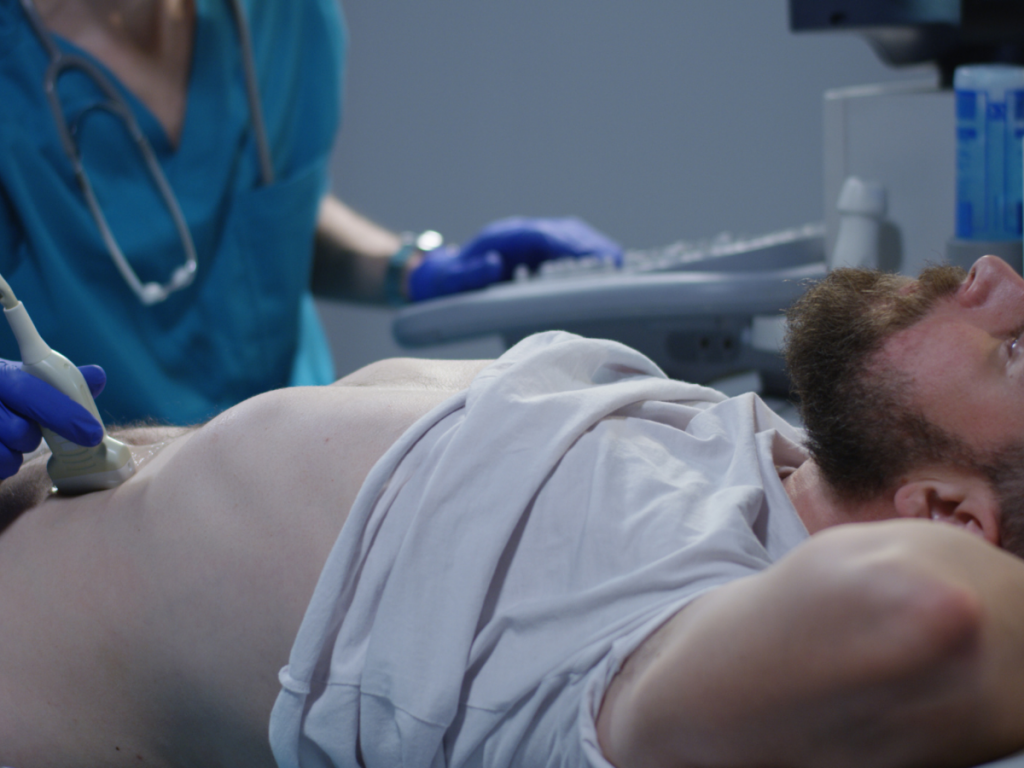
Benefits of Pelvic Ultrasound in Men
Pelvic ultrasound offers several benefits in the evaluation of pelvic organs in men. Some key advantages include:
Non-Invasive and Safe
Pelvic ultrasound is a non-invasive procedure that does not involve exposure to ionizing radiation or the use of contrast agents. It is considered safe and generally well-tolerated by patients.
Real-Time Imaging
Ultrasound provides real-time imaging, allowing immediate visualization of the pelvic structures and any abnormalities present. This aids in on-the-spot assessment and decision-making during the examination.
High Resolution and Detail
Pelvic ultrasound offers high-resolution images, providing detailed information about the size, shape, and texture of the pelvic organs. This level of detail aids in accurate diagnosis and characterization of abnormalities.
Dynamic Assessment
Ultrasound allows for dynamic assessment of the pelvic organs, enabling visualization of any changes during bladder filling and emptying or prostate gland movement. This helps evaluate functionality and detect conditions that may not be evident in static images alone.
Cost-Effective
Compared to other imaging modalities, such as MRI or CT scans, pelvic ultrasound is generally more cost-effective, making it an accessible and valuable tool for diagnostic evaluations.

Conclusion
Pelvic ultrasound plays a crucial role in the diagnostic evaluation of pelvic organs in men. With its non-invasive nature, real-time imaging capabilities, and high-resolution detail, it provides valuable information for the assessment of the prostate gland, bladder, seminal vesicles, and scrotal contents. The benefits of pelvic ultrasound make it an essential imaging modality in the diagnosis and management of various urological conditions in men.
Frequently Asked Questions
What is a pelvic ultrasound in men?
Pelvic ultrasound also known as a male ultrasound scan—is a non-invasive imaging technique used to evaluate the prostate gland, bladder, seminal vesicles, and scrotal contents.
What abnormalities can pelvic ultrasound detect?
It can detect issues such as prostate enlargement, bladder stones, cysts, infections, and other urological abnormalities.
How is pelvic ultrasound similar to a men’s general abdominal scan?
Like an abdominal scan, pelvic ultrasound provides a safe and cost-effective way to assess internal organs through high-resolution, real-time imaging.
How is pelvic ultrasound used for prostate evaluation?
It helps assess the prostate gland and detect conditions like benign prostatic hyperplasia (BPH), prostatitis, or prostate cancer. It can also guide targeted prostate biopsies.
What bladder conditions can pelvic ultrasound help identify?
It can evaluate bladder wall thickness, urinary volume, bladder stones, tumors, urinary tract infections, and residual urine after voiding.
Can pelvic ultrasound assess the seminal vesicles?
Yes. It can visualize the seminal vesicles and detect abnormalities such as cysts, infections, or inflammation.
Does pelvic ultrasound include scrotal evaluation?
Yes. Ultrasound can assess the testicles and epididymis to diagnose conditions like testicular torsion, epididymitis, hydrocele, varicocele, or testicular masses.
Is pelvic ultrasound safe?
Yes. It is non-invasive, does not use ionizing radiation or contrast agents, and is generally well-tolerated.
Very well written. It gives confidence to patients by explaining the process, benefits, and safety of pelvic ultrasound in men.
I didn’t realize pelvic ultrasounds check so many things—not just the prostate but also bladder and scrotal stuff. The part about watching the bladder fill and empty was interesting. Makes me wonder if it can catch problems early. I’m kinda nervous about getting one myself. Wish the article mentioned what it actually feels like during the scan it’d help to know what to expect.
This is helpful, but honestly a bit worrying 😕 If pelvic ultrasound can detect things like prostate enlargement and bladder issues so clearly, why do so many men only get checked when symptoms are already advanced? A lot of urinary problems seem easy to ignore at first 😬 Shouldn’t this scan be recommended earlier for peace of mind?
I like that it’s safer and cheaper than MRI.if you just have bladder issues, do they do the full scan or focus only on the bladder? Also didn’t know they can do a biopsy right after spotting a prostate issue.
I didn’t realize pelvic ultrasound in men covered the prostate, bladder, and even scrotal contents 😟 That makes me wonder how many conditions go unnoticed simply because men delay seeing a doctor. If this scan is non-invasive and cost effective, why isn’t it used more routinely when symptoms like frequent urination or pelvic discomfort appear? 🤔
It feels risky to assume issues are just age related without proper imaging. Also, are patients usually told what exactly the scan is checking before it’s done? Clear explanations could really reduce anxiety.