In the realm of diagnostic imaging, lymph node ultrasound emerges as a powerful tool, providing valuable insights into various medical conditions and diseases. This non-invasive procedure allows healthcare professionals to meticulously examine the lymphatic system, aiding in the early detection and management of numerous health issues.
| Medical Application | Role of Lymph Node Ultrasound |
|---|---|
| Infections | Detects changes in lymph node size, shape, and echogenicity to help diagnose bacterial or viral infections. |
| Inflammatory Disorders | Assesses lymph node inflammation in conditions such as rheumatoid arthritis and lupus to guide treatment strategies. |
| Autoimmune Diseases | Helps detect early signs of lymphadenopathy associated with autoimmune disorders for timely intervention. |
| Metastatic Cancer | Plays a critical role in cancer staging by detecting lymph node metastasis and assessing cancer spread. |
| Lymphoma | Characterizes lymph node abnormalities to support the diagnosis and monitoring of lymphoma progression. |
| Thyroid Disorders | Monitors cervical lymph nodes for potential metastasis in thyroid cancer cases. |
| Systemic Disorders | Provides comprehensive evaluation of lymphatic involvement in systemic diseases such as sarcoidosis. |
| Diagnostic Precision | Analyzes lymph node size, shape, and internal characteristics to differentiate between benign and malignant conditions. |
| Patient Involvement | Supports a patient-centered approach by enabling informed discussions and shared decision-making. |
| Clinical Value | Contributes to early detection, precise characterization, and continuous monitoring of medical conditions. |
The Versatility of Lymph Node Ultrasound
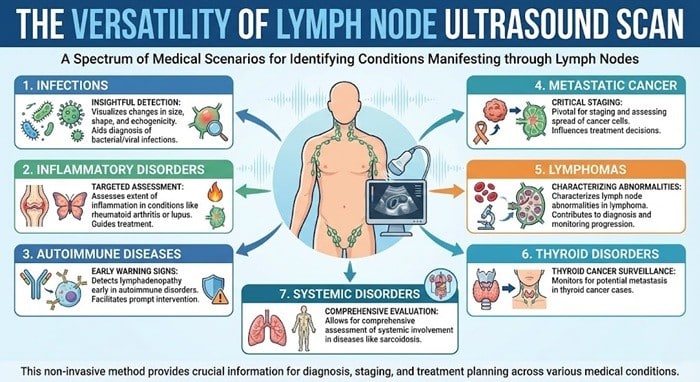
Lymph Node Ultrasound Scan is employed in a spectrum of medical scenarios, aiding in the identification of conditions that manifest through changes in the lymph nodes. This versatile diagnostic method is particularly valuable in:
1. Infections:
- Insightful Detection: Lymph nodes often respond to infections, leading to changes in size, shape, and echogenicity. Ultrasound enables precise visualization, aiding in the diagnosis of bacterial or viral infections.
2. Inflammatory Disorders:
- Targeted Assessment: Conditions such as rheumatoid arthritis or lupus can trigger lymph node inflammation. Ultrasound provides a targeted approach to assessing the extent of inflammation, guiding treatment strategies.
3. Autoimmune Diseases:
- Early Warning Signs: Autoimmune disorders may present with lymphadenopathy. Lymph node ultrasound becomes instrumental in detecting early signs, facilitating prompt intervention and disease management.
4. Metastatic Cancer:
- Critical Staging: In cancer diagnostics, lymph node ultrasound is pivotal for staging and detecting metastasis. It enables healthcare professionals to assess the spread of cancer cells, influencing treatment decisions.
5. Lymphomas:
- Characterizing Abnormalities: Lymphoma, a type of blood cancer, often affects lymph nodes. Ultrasound aids in characterizing abnormalities, contributing to the diagnosis and monitoring of lymphoma progression.
6. Thyroid Disorders:
- Thyroid Cancer Surveillance: Lymph nodes in the neck are closely linked to thyroid health. Ultrasound assists in monitoring for potential metastasis in cases of thyroid cancer.
7. Systemic Disorders:
- Comprehensive Evaluation: Certain systemic diseases, such as sarcoidosis, may involve multiple organ systems, including the lymphatic system. Lymph node ultrasound allows for a comprehensive evaluation of systemic involvement.
Precision in Diagnosis
One of the remarkable features of lymph node ultrasound is its ability to provide detailed images, allowing healthcare professionals to precisely identify abnormalities. By examining the size, shape, and internal characteristics of lymph nodes, clinicians can distinguish between benign and malignant conditions.
Patient-Centric Approach
The patient-centric nature of lymph node ultrasound contributes to a more informed and collaborative healthcare journey. Patients can actively participate in discussions about their diagnostic results, fostering a sense of empowerment and facilitating shared decision-making regarding treatment options.
Conclusion
In the evolving landscape of medical diagnostics, lymph node ultrasound stands as a beacon, guiding healthcare professionals in the identification and understanding of various medical conditions. Its role in early detection, precise characterization, and ongoing monitoring underscores its significance in ensuring timely interventions and improved patient outcomes. As research and technology continue to advance, the impact of lymph node ultrasound in the realm of healthcare is poised to grow, promising a future where diseases are identified and managed with greater precision and effectiveness.
Frequently Asked Questions
What is a lymph node ultrasound?
It is a non-invasive diagnostic imaging procedure that examines the lymphatic system and provides detailed insights into various medical conditions.
What makes lymph node ultrasound a versatile diagnostic tool?
It can identify conditions that cause changes in lymph nodes, including infections, inflammatory disorders, autoimmune diseases, metastatic cancer, lymphomas, thyroid disorders, and systemic diseases.
How does lymph node ultrasound help diagnose infections?
It visualizes changes in lymph node size, shape, and echogenicity, helping detect bacterial or viral infections.
Can lymph node ultrasound assess inflammatory disorders?
Yes. It provides targeted assessment of inflammation caused by conditions such as rheumatoid arthritis or lupus.
How is lymph node ultrasound useful in autoimmune diseases?
Autoimmune disorders may present with lymphadenopathy, and ultrasound helps detect early warning signs for prompt intervention.
What role does lymph node ultrasound play in metastatic cancer?
It is critical for staging and detecting metastasis by assessing whether cancer cells have spread to nearby lymph nodes.
How does lymph node ultrasound assist in diagnosing lymphomas?
It helps characterize abnormalities in lymph nodes and supports diagnosis and monitoring of lymphoma progression.
What is its significance in thyroid disorders?
Lymph node ultrasound aids in monitoring neck lymph nodes for potential metastasis in thyroid cancer.
How common is it for lymph node ultrasound to be used in regular checkups? Or is it only done when something’s suspected?
Has anyone here actually had a lymph node ultrasound before? I’m wondering if the procedure feels any different from a regular ultrasound.
I found a lump in my armpit last week and my GP sent me for one of these. I’m absolutely terrified it’s breast cancer spreading, but trying to stay calm until I get the results.
Wow, this article really breaks it down so clearly! I never realized lymph node ultrasound could detect such a wide range of diseases. Thanks for sharing this! 🙌
My doctor ordered a lymph node ultrasound because of a lump in my neck, and waiting for answers was brutal. The scan itself was easy, but the fear of what they might find was the hard part.
Very well written and easy to understand. I’ll definitely share this with my friends in the medical field!
I didn’t realize lymph node ultrasounds were used this widely. Still feels like doctors don’t explain this enough during appointments.
does the accuracy of the scan depend heavily on the technician? I’ve heard that bad technique can really affect the results.
I found this page after my ultrasound report mentioned “reactive lymph nodes” and no one explained what that actually meant. Reading this helped a bit, but I still feel stuck between “it’s probably nothing” and “what if it’s something serious.
I had no idea lymph node ultrasounds could be useful for so many different conditions. I always thought they were mostly for cancer checks, but it’s interesting that they can spot infections, autoimmune problems, or even issues linked to thyroid disorders. Makes sense that ultrasound can show changes in size or shape, but I’m curious how accurate is it at telling the difference between something benign and serious? I guess it’s reassuring that the test is non-invasive and quick, but it’s still a little nerve-wracking thinking about what the results could show.
I didn’t realize it’s not just about detecting cancer but also infections, lupus, or sarcoidosis. It’s helpful that the scan can give a detailed view of the size and internal structure of the nodes, so doctors can make more precise decisions. I’ve been wondering if there’s any prep needed before the scan, like fasting or special positioning, because I want it to be as accurate as possible. Sounds like a simple but really important diagnostic tool overall.