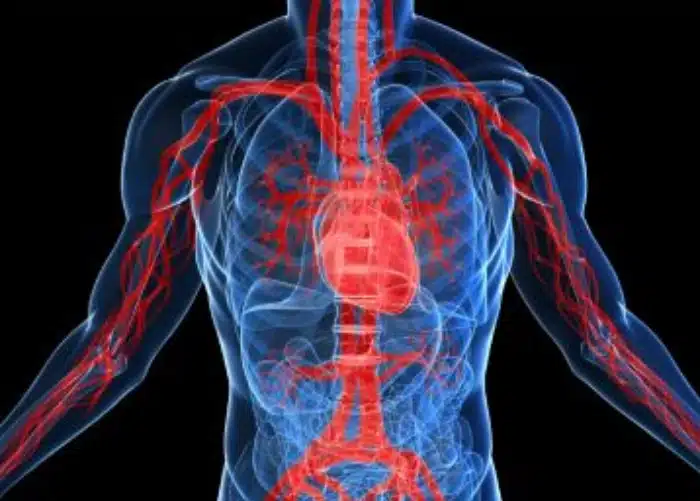
Pumping function
Measure how strongly the left ventricle is pumping — the number your clinician looks for first.
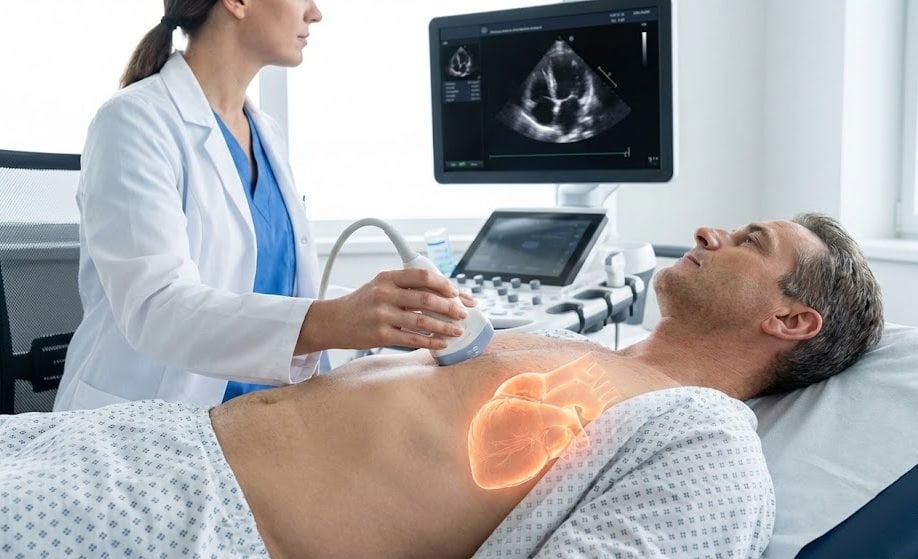
A detailed ultrasound of the heart, performed by an experienced cardiac sonographer. No radiation, no preparation, and a reported result you can take to your GP or cardiologist.
Live images, reported by a specialist.Choose your clinic and view appointment options in our online booking system.
Explore your appointmentHear from people
who have visited us.

An echocardiogram uses sound waves to produce live, moving images of the heart. It shows the heart working rather than a single still picture, which is why it answers questions an ECG or a chest X-ray cannot.
Measure how strongly the left ventricle is pumping — the number your clinician looks for first.
Check each valve for narrowing or leaking, and how significant it is.
Look at the size of the chambers and the thickness of the heart muscle.
Use Doppler to follow blood moving through the heart and estimate pressures.
This is a planned assessment, not an emergency service. Chest pain that is severe or lasts more than 15 minutes, or breathlessness that comes on suddenly, needs urgent help — call 999. Do not wait for a scan appointment.
At Phoenix Ultrasound, we provide advanced echocardiography, a safe, non-invasive ultrasound scan that evaluates the structure and function of your heart. This test uses high-frequency sound waves to produce detailed images of your heart chambers, valves, and blood flow, helping your doctor assess how well your heart is working.
Hear the summary of the text below from the following voice:
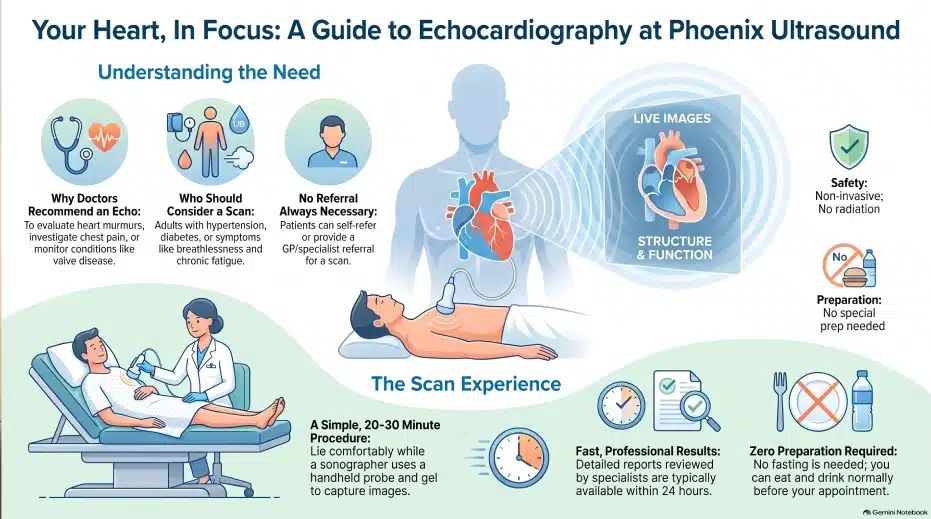
An echocardiogram (echo), or heart ultrasound, is a diagnostic test that uses sound waves to create live moving images of the heart.
It helps detect abnormalities in heart size, shape, movement, and function. The test is completely painless and uses no radiation
| Feature | Details |
|---|---|
| Test | Echocardiogram / Heart Ultrasound |
| Purpose | Assess heart structure, function, valves, and blood flow |
| Duration | Approximately 20–30 minutes |
| Radiation | None |
| Invasiveness | Non-invasive and painless |
| Preparation | No special preparation required; eat and drink normally |
| Referral | Self-referral or GP/specialist referral |
| Results | Detailed report usually available within 24 hours |
| Who It’s For | People with heart symptoms, cardiovascular risk factors, or those needing heart health assessment |
Your doctor may recommend an echocardiogram to:
This scan is suitable for:
This scan is suitable for:
From getting ready to discussing what comes next, here is a simple guide to your appointment.
A question before you book? Call usBreathlessness, chest pain, palpitations, a known murmur, your medication and any family history of heart disease all help direct the scan.
You lie on your left side, gel is applied to the chest and the probe is moved across several positions. You may be asked to hold your breath briefly. It is painless and takes about 20 to 30 minutes.
Ask what the measurements mean, whether anything needs repeating, and who should receive the report.
Choose the location that works for you. Confirm your selected clinic in the booking system before completing your appointment.
Need something more personal?
Speak to the team before booking.
No. Eat, drink and take your medication as normal. Wearing a top that is easy to remove makes the appointment quicker.
Neither. An echocardiogram uses sound waves, like any other ultrasound. There is no radiation and nothing is injected. You will feel the gel and some pressure from the probe, and that is all.
No. An ECG records the heart’s electrical activity as a trace. An echocardiogram shows the heart moving, so it can measure pumping function, valve problems and chamber size. They answer different questions and are often used together.
A detailed report is normally ready within 24 hours and sent to you. You can share it with your GP, a cardiologist or an insurer.
No, you can book directly. If the scan shows something that needs following up, the report will say so and you can take it to your GP or a cardiologist.
Yes. The booking system offers the echocardiogram together with a full vascular Doppler study, a carotid and CIMT scan, or a full-body package, in one visit.
Book your echocardiogram below. Follow the booking form’s Next buttons to continue, one step at a time.
Loading the booking form…
Calendar not displaying? You can open the booking page in a new tab ↗.
Call the teamBooking the heart scan as part of a vascular or full-body package? Each scan keeps its own preparation. If anything is unclear, call us on 020 3318 1373 before your visit.
If you feel unwell, seek medical advice. This page is general information, not a diagnosis. For urgent concerns, contact your GP or NHS 111; in an emergency call 999.
Further reading: NHS guidance on echocardiograms · NHS guidance on heart failure
No. It’s a completely painless and non-invasive scan. You might feel slight pressure from the probe, but it’s not uncomfortable.
No fasting or special preparation is required.
Yes, you can resume all normal activities immediately after the scan.
All scans at Phoenix Ultrasound are performed by qualified cardiac sonographers with extensive NHS and private sector experience.
You’ll receive a written report, and if needed, your referring doctor or cardiologist will review and discuss the findings with you.
If you have an existing heart condition, your doctor may recommend regular monitoring. Otherwise, a routine scan every few years can be part of preventive health screening.
Please choose a location and time slot to book your appointment. If you need any help with booking, please contact us. We’re available 7 days a week, from 7am to 10pm.
Please check what preparation is needed before your ultrasound scan below:
| All Pelvic scans Kidney and Urinary tract Prostate & Urinary Tract Appendicitis Early Pregnancy Scan | Drink One Liter of still water (2 Pints) One hour before your scan. Do NOT use the toilet so you would arrive with a full bladder. Medication can be taken as normal. |
| Liver scans Upper Abdomen Liver Fibroscan (Liver Elastography) | Do NOT eat for 6 hours prior to scan time. |
| Combination of above scans | Same as respective scan’s preparation. |