Dark spots on the kidneys can be a cause for concern, often prompting individuals to seek answers through diagnostic imaging. One valuable tool for uncovering the secrets hidden within our organs is the kidney and bladder ultrasound scan. In Phoenix, ultrasound services play a crucial role in detecting abnormalities and providing early intervention. Let’s explore the symptoms, detections, and the importance of kidney and bladder ultrasound scans.
| Category | Details |
|---|---|
| Early Symptoms Visibility | Dark spots or abnormalities in the kidneys may not show noticeable symptoms in the early stages. |
| Pain or Discomfort | Persistent pain in the back or side where the kidneys are located may indicate a kidney issue. |
| Changes in Urination | Changes in urine frequency, color, or the presence of blood can signal kidney problems. |
| Swelling | Swelling in the ankles, legs, or face may occur due to fluid retention from kidney dysfunction. |
| Primary Diagnostic Tool | Kidney and bladder ultrasound scan is a non-invasive imaging method using sound waves to create detailed organ images. |
| Cysts | Fluid-filled sacs that may form in the kidneys and appear as dark spots on imaging. |
| Tumors | Both benign and malignant tumors can appear as dark spots and require further evaluation. |
| Calcifications | Hardened mineral deposits that appear as dark areas and may indicate kidney function issues. |
| Infections | Inflammatory processes such as infections can be detected through ultrasound imaging. |
| Early Detection Benefit | Ultrasound scans help detect abnormalities early, allowing for timely intervention and management. |
| Non-Invasive Nature | Ultrasound is a non-invasive and safer option for routine screening and follow-up assessments. |
| Diagnostic Accuracy | Ultrasound provides detailed images that help healthcare professionals diagnose and plan treatment accurately. |
| Monitoring Role | Regular ultrasound scans are essential for monitoring known kidney conditions and adjusting treatment plans. |
| Local Ultrasound Services | Reputable Phoenix ultrasound providers play a key role in promoting kidney health through early detection. |
| Overall Clinical Importance | Kidney and bladder ultrasound scans are vital for detecting, diagnosing, and managing kidney abnormalities. |
Dark spots or abnormalities in the kidneys noticeable Symptoms:
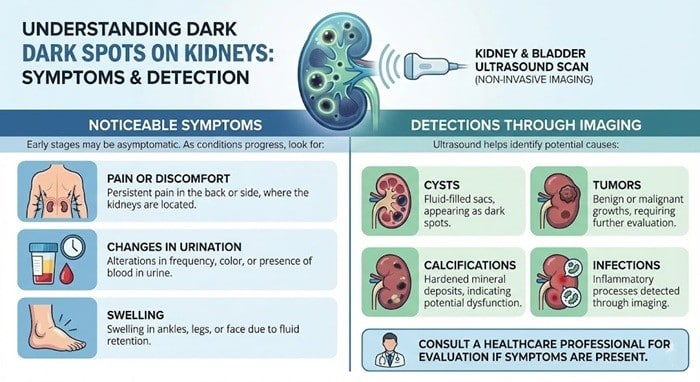
Dark spots or abnormalities in the kidneys, often referred to as a spot on kidney, may not always present noticeable symptoms in their early stages. However, as conditions progress, individuals might experience:
- Pain or Discomfort: Persistent pain in the back or side, where the kidneys are located, may be indicative of an issue.
- Changes in Urination: Alterations in frequency, color, or the presence of blood in urine could signal kidney problems.
- Swelling: Swelling in the ankles, legs, or face may occur due to fluid retention caused by kidney dysfunction.
Detections: Understanding the potential causes of dark spots in the kidneys requires diagnostic procedures. A kidney and bladder ultrasound scan is a non-invasive imaging technique that uses sound waves to create detailed images of the organs. It can help identify various conditions, including:
- Cysts: Fluid-filled sacs that can form in the kidneys, leading to dark spots on imaging.
- Tumors: Both benign and malignant tumors may appear as dark spots, requiring further evaluation for proper diagnosis.
- Calcifications: Hardened deposits of minerals may manifest as dark areas, indicating potential issues with kidney function.
- Infections: Inflammatory processes, such as infections, can also be detected through ultrasound imaging.
Importance of Kidney and Bladder Ultrasound Scans:
- Early Detection: Ultrasound scans can reveal abnormalities in their early stages, allowing for timely intervention and management.
- Non-Invasive: Unlike other imaging methods, ultrasound is non-invasive, making it a safer option for routine screenings and follow-up assessments.
- Accuracy: Ultrasound provides detailed images, aiding healthcare professionals in accurately diagnosing and planning appropriate treatment.
- Monitoring: For individuals with known kidney conditions, regular ultrasound scans are essential for monitoring changes and adjusting treatment plans accordingly.
In Phoenix ultrasound services offered by reputable providers like Phoenix Ultrasound play a crucial role in promoting kidney health. Early detection through ultrasound can significantly improve outcomes and enhance the quality of life for individuals facing kidney concerns.
In conclusion, understanding the symptoms and detections associated with dark spots in the kidneys emphasizes the importance of kidney and bladder ultrasound scans. Whether prompted by symptoms or as part of routine screenings, these non-invasive procedures are invaluable in unraveling the mysteries hidden within our vital organs. If you’re experiencing symptoms or have concerns about your kidney health, consulting with healthcare professionals and scheduling a kidney and bladder ultrasound scan can be a proactive step towards a healthier future.

Frequently Asked Questions
What are dark spots on the kidneys?
Dark spots or abnormalities on the kidneys refer to areas detected during imaging that may indicate cysts, tumors, calcifications, or infections.
Do dark spots on the kidneys always cause symptoms?
No. Dark spots may not present noticeable symptoms in their early stages.
What symptoms might appear as kidney abnormalities progress?
Possible symptoms include:
- Pain or discomfort in the back or side
- Changes in urination (frequency, color, or blood in urine)
- Swelling in ankles, legs, or face due to fluid retention.
Why are regular ultrasound scans important for people with known kidney conditions?
Regular scans help monitor changes, track disease progression, and guide treatment adjustments.
What role do ultrasound services in Phoenix play in kidney health?
According to the text, Phoenix ultrasound services contribute to early detection and improved outcomes for individuals with kidney concerns.
How should I prepare for a kidney and bladder ultrasound scan?
Patients are usually asked to drink water and avoid urinating before a bladder ultrasound so the bladder is full. Specific preparation instructions may vary depending on the provider.
How long does a kidney and bladder ultrasound scan take?
Most kidney and bladder ultrasound exams take about 20–30 minutes, depending on the purpose of the scan.
Is a kidney ultrasound painful?
No. Ultrasound scans are painless procedures. You may feel slight pressure from the probe on your abdomen or back.
Can a kidney ultrasound detect kidney stones?
Yes. Ultrasound imaging can help detect kidney stones, especially larger ones, although other imaging tests may sometimes be needed for confirmation.
I actually had a kidney ultrasound last month because of a “dark spot” they found on a CT scan 😬. Turned out to be just a simple cyst, but the stress while waiting was real. This article explains the possibilities pretty well.
My report says I have a “hypoechoic mass” which basically looks like a dark spot on the screen. My doctor said it’s likely just a cyst but wants to double check in 3 months. The waiting is absolute torture.
This was so informative! I had no idea dark spots on kidneys could be linked to so many different conditions. Thanks for sharing this!This was so informative! I had no idea dark spots on kidneys could be linked to so many different conditions. Thanks for sharing this!
Is a kidney ultrasound the same as a renal scan, or are those different tests?
I wish doctors explained things in plain language right away instead of letting patients Google terms like dark renal lesion.
This was such an insightful read! I’ve always wondered what “spots” on kidney scans could represent, and your breakdown of cysts, tumors, and calcifications really clarified that. What I found especially helpful was the reminder that not all dark spots are serious — some can be benign or manageable if caught early. I think this kind of information helps reduce unnecessary anxiety and promotes proactive healthcare.
I’ve dealt with kidney infections before, and my ultrasound also showed a dark patch. They said it was inflammation. Anyone else experienced something similar? 🤔
I ended up here because my ultrasound report mentioned a “dark spot” on my kidney and no one explained it to me properly. Reading this helped me understand that it doesn’t automatically mean something serious, but I won’t lie it’s still hard not to worry when it’s about your kidneys.
I never knew dark spots on kidneys could be so many different things—cysts, tumors, or even calcifications. Makes sense why an ultrasound is recommended early, even if you don’t have symptoms yet. I like that it’s non-invasive and quick, but I’m still nervous about what they might find if you do have a spot. Has anyone had a scan and later found it was nothing serious? I guess it’s reassuring that these ultrasounds can catch problems before they get worse, but it’s still a bit stressful thinking about what a dark spot could mean.
This article cleared up a lot of my confusion about kidney dark spots. I didn’t realize that swelling in the legs or changes in urination could actually be related to kidney issues. It’s nice to know that a kidney and bladder ultrasound can provide detailed images without any pain or radiation. Makes me think I should probably get checked just to be safe. I’m curious though how often should someone repeat an ultrasound if they’ve already had one dark spot detected? I guess it depends on what the doctor recommends, but still wondering what’s typical.